
Why the Work We Do Ultimately Doesn’t Matter (And That’s Okay)!
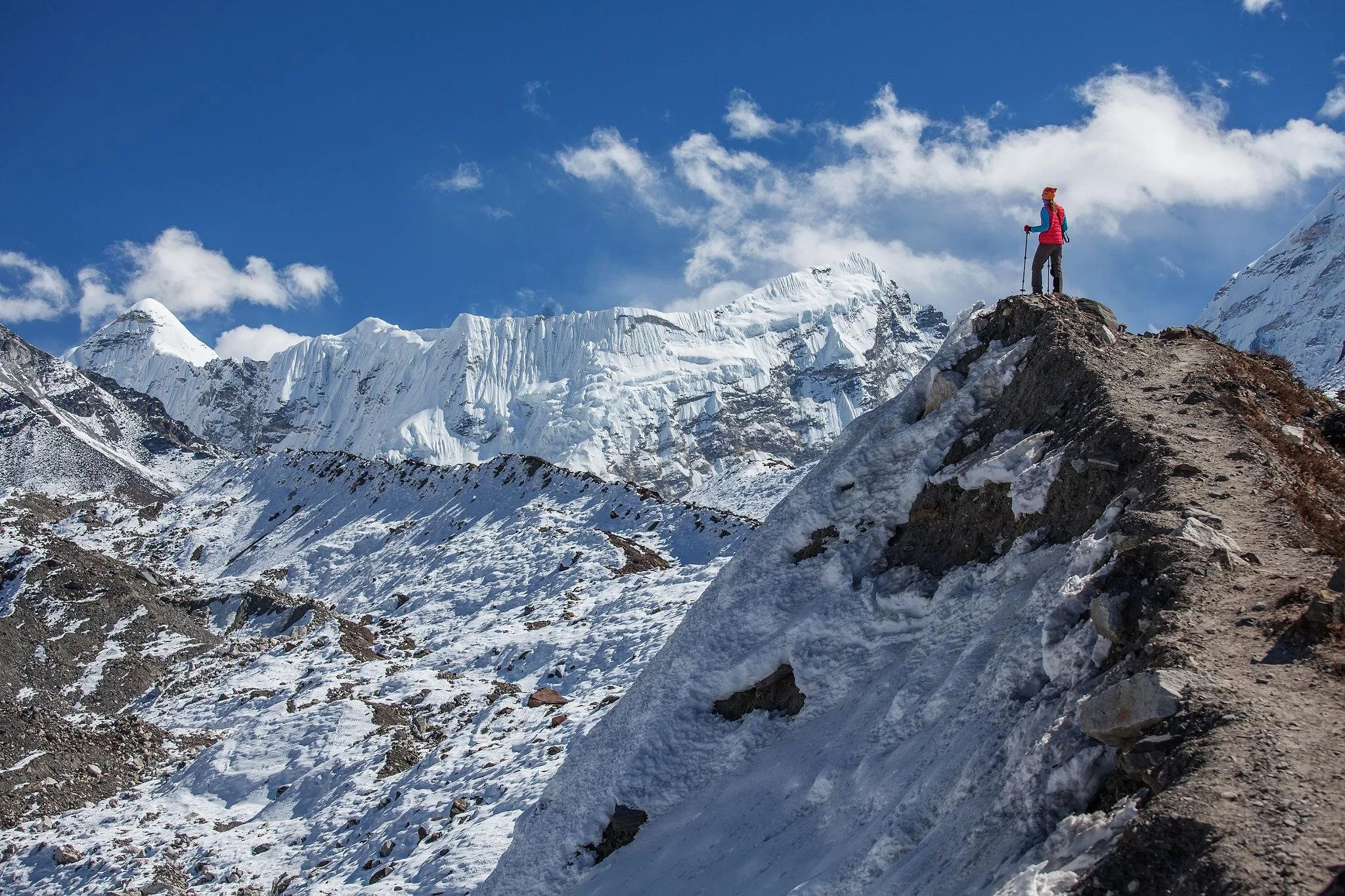
Late last year, I trekked to Everest Base Camp. It was an amazing experience, where I had lots of time to be. Remember, we’re called human beings, not human doings!
The Himalayan scenery is staggering, majestic and vast. Being in the presence of Sagarmatha (the ‘Goddess of the Sky’) and the other imposing 8,000m peaks for close to 2 weeks, made me realise that we really are insignificant in the grand scheme of things. Not just insignificant in physical size (6ft something to 29,035 ft), but in age, spirit & soul.
The Himalayan mountains began forming approximately 40 to 50 million years ago, as the Indian and Eurasian plates collided. But Planet Earth, according to radiometric dating, is about 4.543 billion years old!
Homo sapiens are believed to have emerged in Africa around 300,000 years ago, so we’re really young and new to all of this. Just trying to find our way, without creating Armageddon first.
My loose translation of all of this wonderment, when I returned to Sydney from Kathmandu, was that we really don’t matter. Which then gives us a choice.
Do we a/ feel sorry for ourselves and live a life cramped by the fear of our limitations or b/ take the gloves off and live a carefree life, a big life, a full life, because we know it doesn’t really matter.
It doesn’t matter, because all that we are is atomic matter - collections of protons, neutrons, and electrons bound together in complex molecular structures. We are nothing more than reorganised stardust, shaped by evolution into conscious beings who think, feel and work.
At last, I hear you say, there’s that word ‘work’. Does the work we do really matter?
We chase promotions, design perfect PowerPoint slides at 0100 on the morning of a supposedly super important meeting - talking of which, most are a complete waste of time - we fall out with our colleagues because they said something 2 years ago in a way we didn’t like, we become afraid to share our ideas for fear of being shut down … the list goes on. No wonder that more and more of the working population are becoming anxious, which is a pre-cursor to depression *
But if we zoom out to a cosmic scale, a strange realisation hits - none of this really matters. Not our job titles, not our inboxes, not even that really important project we just finished. And you know what? I think this might be a really good thing. Think option b/ above.
Let’s be honest - how many people remember the great corporate achievements of the past? Do you know who invented the filing cabinet? Or who had the best annual sales report in 1923? Probably not.
If history forgets even the biggest successes, maybe we shouldn’t stress so much about perfecting that spreadsheet.
Many of us like to believe that our work is meaningful - that we’re making a difference. But how much of that is just something we tell ourselves to make the daily grind bearable? Sure, there are lots of organisations who have real purpose, with awesome people doing awesome work. But for most of us, the world will keep turning, whether we meet our KPI’s or not. If the biggest achievements in history fade into irrelevance, maybe we can relax about whether our latest project gets approved.
So, here’s the fun part.
If our work doesn’t really matter in the grand scheme of things, then we’re free to enjoy it on our own terms.
To be more playful. To be more innovative. To relax a bit more. To smile and laugh. To enjoy the ride. To embrace working with super smart, good, kind people (as long as you’re good & kind too). To take those metaphorical gloves off and play large, rather than taking on the role of poor little me.
Go for it on the things in your role that do matter (about 20% of the things on your to do list) and let go of the rest **. This will free up your time and energy to focus on the tasks that are going to make a meaningful contribution, it will allow you to be a better version of yourself, and because you’ll be looking after yourself more, you’ll be able to look after the people around you better too.
Because isn’t that what great leaders do? The clue is in the name - they lead their people (not manage them). They look after them. They nurture them. They believe in their potential. They afford them opportunities to express themselves and grow. They hold them to account. They go first when the heat is on. And last when it’s the right thing to have the team lead the way. They take the blame when things go wrong, and they praise their people when things go well.
But you can’t do this if it all matters too much. By clinging on to the importance of everything, you can actually place limitations on your own potential and performance, as well of those around you.
Whereas, if it matters less, you’ll be more likely to let go, to take the gloves off and work with a greater sense of freedom. This will make things a whole lot more enjoyable for you and your people.
Plus, knowing that our jobs aren’t the centre of the universe gives us permission to focus on the things that do matter - like enjoying time with family and friends, laughing at bad jokes, enjoying hobbies, staying fit & healthy, or finally taking that vacation instead of hoarding days in lieu, as some sort of badge of honour.
At the end of the day, we’re just highly organised stardust pretending to be important for a little while. Instead of worrying about leaving a lasting impact, maybe we should focus on making the journey a little more fun.
If you’re saving lives, protecting others from harm, or working on game changing technologies, I think we can all agree that that this work does matter. For the rest of us, I think we’ll be well advised to take work seriously enough to do our jobs really bloody well, but not so seriously that it takes over our lives.
To care less, without being careless.
To not just be human doings. But from time to time, human beings.
Surely this is what matters?
Mike - Chief Pig
*In the Australian workforce, approximately 16% of workers experience mild levels of depression and 5.5% experience symptoms of clinical depression.
**The Pareto Principle