
Navigating the Rip: Leadership Lessons observed from a bench in Manly, Sydney.
I am blessed to have two great friends who I meet from time to time at one of the benches by the ocean in Manly. (Did you know they call it Manly on Thames these days because of the number of Poms living there)! Both @PeteBrown and Anton Buchner are Aussies, so I’m doing my bit to protect the integrity of local culture!
Nothing is off limits when we catch up. There is no agenda, zero expectation as to what the topic of conversation might be and certainly no judgment if / when any of us becomes vulnerable during our catch up. It’s a really cool thing to do, something that – sweeping generalisation coming up – men in particular are not great at.
During last week’s discussion, I had this moment where I realised that an ocean rip is a great metaphor for not just leadership, but life. I then recalled the two times I’ve been stuck in a rip and how on both occasions, I failed to do what I knew I needed to do. On the first occasion, I had a tap on my shoulder by a course marshal while I was competing in a swim / run event. I was swimming hard but wasn’t getting any closer to the beach! And the second time, I was really close to shore - it was somewhat embarrassing to have a surf life saver come and drag me 2 metres to the side of where I was struggling!
Enough of revealing my failings and back to the rip as a metaphor.
To the unprepared, a rip current can be overwhelming. Panic leads to exhaustion and fighting against the current often results in failure.
However, those who understand the nature of a rip know that survival requires a counterintuitive response – to let it take you away from the shore and navigate the situation wisely versus fighting the current which is the path of the shortest route back to dry land.
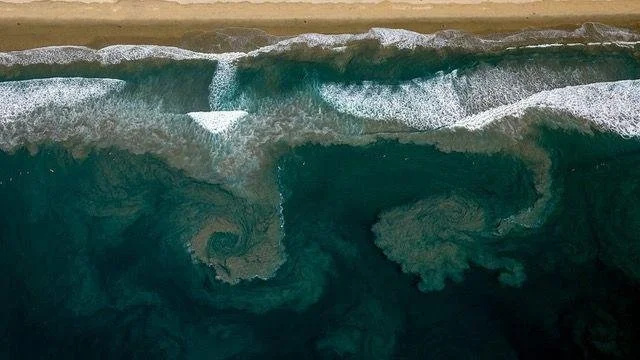
The same applies to leadership. Leaders, like swimmers caught in a rip, often face external forces beyond their control - market shifts, crises, resistance from teams, or unexpected setbacks. Instinctive reactions, such as forcefully pushing forward or resisting change, often lead to exhaustion and failure. Effective leaders, like skilled ocean swimmers, recognize that success comes not from brute force but from strategic thinking, calm execution and adaptability.
You can’t beat a rip current. Rather it’s a force to be understood and worked with.
Leaders frequently encounter metaphorical rip current - economic downturns, technological disruptions, internal conflicts. Fighting these forces head-on without strategy can drain energy and credibility. And we know that one of the keys to high performance is energy management.
The first step in overcoming a rip is to recognise that you’re in one. It’s the same for leaders. How often do we think we have a shared understanding of where the business is at, only to find out later that we weren’t? The consequences of not having this collective awareness can sometimes have dire consequences.
Strong self and situational awareness, both of which underpin our emotional intelligence (EQ) can avoid us trying to force a failing strategy or resisting inevitable change, both of which will lead to burnout. A wiser approach is to pause, assess the situation, and adjust accordingly.
Then there’s staying calm under pressure. A panicked swimmer in a rip will flail, exhaust themselves, and make irrational decisions. Similarly, leaders who panic under pressure often make reactionary choices that worsen the situation. Strong leaders maintain composure, assess the bigger picture, and adjust their strategies accordingly.
The ability to regulate our emotions, make rational decisions under pressure and guide others through uncertainty is a core leadership skill. Just as an experienced swimmer caught in a rip remains calm and follows a plan, great leaders do not let fear dictate their actions.
Winston Churchill, facing overwhelming odds in World War II, did not panic or act impulsively. Instead, he remained steadfast, inspired his people, and made calculated decisions. Similarly, in business, when companies face crises – a financial collapse, a PR disaster, major internal conflicts – it’s the leaders who calmly assess the situation and seek innovative solutions who are far more likely to succeed than those who react out of fear.
Like a swimmer escaping a rip by swimming parallel to shore, leaders must find alternative routes to success.
If a business strategy isn’t working, blindly pushing forward isn’t the answer. Re-assessing, pivoting and finding a smarter path is. If a team resists change, leaders shouldn’t force it but rather communicate, engage and align people towards a shared vision.
Sometimes a rip current can actually be used to a swimmer’s advantage, leading to calmer waters where waves can assist in returning to shore. Similarly, challenges in leadership often contain hidden opportunities. What seems like a crisis can become a catalyst for innovation and transformation.
Great leaders don’t just survive adversity, they harness it. They see challenges as opportunities. By understanding when to resist, when to adapt and when to ride momentum, setbacks can be turned into stepping stones.
The ocean rip analogy is not just about leadership in business. The conversation with Pete & Anton on the bench, started out with a lightbulb moment as to how the rip talks to so many challenges and opportunities we all face in life. The strongest leaders may well be the strongest people.
But none of us are bullet proof. The question is how prepared are we to be open and vulnerable? In high performance, we talk about how ‘weak is tough’. We all face self-doubt, can be consumed by failure, have insecurities, imposter syndrome, a feeling of being under constant pressure and duress - the list goes on. It’s those of us who view these moments as growth opportunities rather than insurmountable obstacles that emerge stronger.
Adversity does not define a leader - how they respond to it does.
Not only this, but leadership, as Simon Sinek famously quoted is ‘not about being in charge, but to look after the people in our charge’. The great leaders don’t see the rip as just about personal survival - it’s about guiding others. Lifeguards don’t just drag struggling swimmers to shore; they keep them calm and direct them toward safety. Similarly, strong leaders support their teams through turbulent times by providing clarity, confidence and direction.
The best leaders don’t just keep their heads above water; they ensure that their entire team swims together toward a clear, achievable goal. They empower individuals to remain composed under pressure, think critically and work collaboratively toward solutions, rather than being swept away by fear.
Back to the bench at Manly and thanks to Pete & Anton. By having time to be and to reflect, the rip metaphor became very clear to me. T
o let go, versus cling on, is a powerful message and approach to embrace in our day to day lives. To welcome and celebrate what we have, versus mourn what we don’t.
Do this and we can embrace our authentic leadership potential.
Do this and we can live our best life.
Mike - Chief Pig