
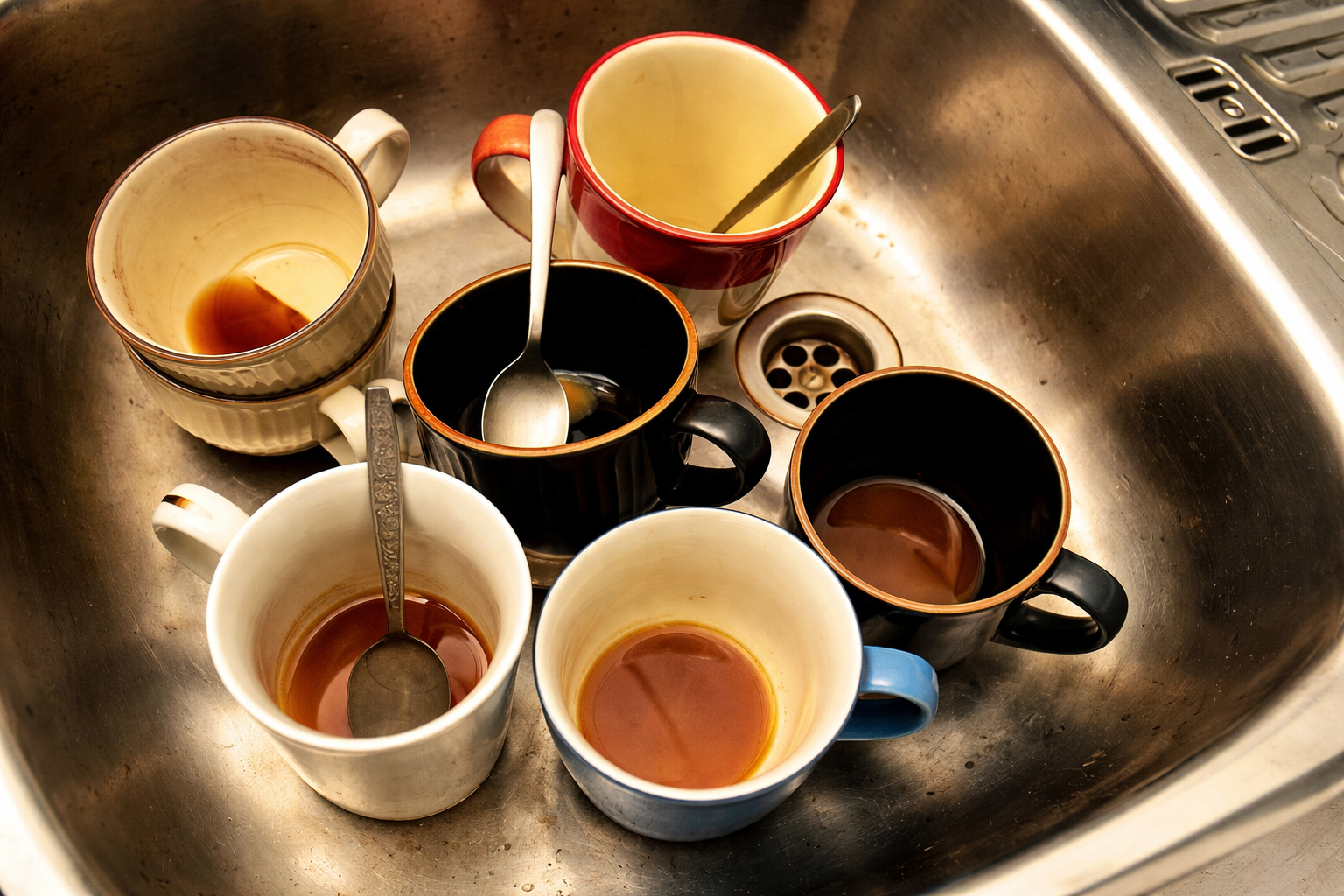
Does your office kitchen look like a pigsty? What it says about your culture...
Some years ago now, I arrived at a hypothesis which went something like ‘one can learn a huge amount about the culture of an organisation by its’ kitchen(s)’. I then had this idea of travelling the world to take photographs of office kitchens, while observing people’s behaviours in this space, and then conducting in depth interviews and facilitating focus groups, to ascertain whether this hypothesis was accurate.
I didn’t end up doing this, but yesterday, when I was facilitating a workshop with the team at UnLtd, the hypothesis presented itself once again.
We were fortunate to enjoy the generosity and incredible facilities of our hosts at The Trade Desk for the day. When it came to the morning, lunchtime and afternoon breaks, I was struck by the kitchens and the palpable positive energy and vibe that came from how employees were interacting in these spaces.
And here’s the kicker. When I got home last night, I jumped onto The Trade Desk’s website, where it reads …
“while we’ve achieved some amazing things with our technology, our people will always be our greatest asset. When you join The Trade Desk, you’re entering an environment built on empathy, collaboration, and ownership.
In life, we invest in and protect our prized assets.
Well, if I had a dollar for every time I’ve met with senior executives who’ve told me they’re a people first business, when they’re clearly not, I wouldn’t be writing this article!
Do we invest in our people ahead of everything else? If we say people are our most prized asset, show me evidence of how you’re investing in and protecting them. *
* Here’s the question. Where is ‘people & culture’ on the Executive Team’s meeting agenda? If it’s not at the top, or at the very least close to the top, then you’ve just indicated you’re not a people first organisation!
But at The Trade Desk yesterday, what I saw and felt in the kitchens was compelling proof that my hypothesis has legs.
“When you join The Trade Desk, you’re entering an environment built on empathy, collaboration, and ownership.”
Let’s take each of these values in turn:
Empathy - from the modern fit out and beautiful design, to generously stocked fridges, fresh fruit and snacks, not to mention a free hot and cold buffet at lunch, and a play space with board games and a table tennis and pool table, here is a kitchen / dining space that clearly understands it needs to create the right environment for its employees to choose to be in the office versus working from home, that sapiens are communal beings who need to belong, that we need to manage and replenish our energy through the day to bring our very best thinking and ideas.
Collaboration - by creating a space that people want to be in, collaboration is unavoidable. I saw numerous small groups of employees immersed in conversation and debate, clearly enjoying their time and often with a document or screen as a primary focus. This is clearly a space to socialise, replenish and problem solve. Later in the afternoon, a large number of people gathered in the open plan space for a virtual meeting led by senior executives in the US and held on a large screen.
Ownership - the kitchen space and open plan dining area was spotless. There were no dirty mugs, glasses, plates or cutlery left lying around. Everyone takes their used crockery & cutlery to a space behind the kitchen, demonstrating respect for themselves and each other and a clear indication that the privilege of what they’re offered in this space is acknowledged with gratitude.
Culture is multi-faceted. Its’ constituent parts include language, ideas, beliefs, customs, codes, institutions, tools, techniques, works of art, rituals and ceremonies. In other words, it’s a complex thing. As senior leaders, it is our role to prioritise action orientation in these arenas and to buy into an understanding that the business of business comes down to behaviours, differentiated and progressive problem solving & ideation capability, and brilliant communication skills. That how we all show up is the root cause of the results we enjoy. That culture is about the interface of the hardware and software of an organisation.
So, we need to do the critically important strategic work of establishing the right values & practices that we expect everyone to live and breath every day, with real rigour. Organisations don’t have values, the people in organisations have values. So, don’t do this work in a one-hour session at an Executive Team offsite and present what you came up with at an all hands meeting on a Friday afternoon!
Seek the counsel of c. 20 to 30% of your FTE’s, get their feedback as to the type of organisation they want to work for, ask them what they value and arrive at the key themes. Then connect what you’ve found with your vision, purpose and mission. Which of these values will get you to your 3+ year ambitions? Have you missed anything? What’s superfluous?
And once you have these values, bring them to life.
Remember that values really have no value until you define what you mean by them. Make them a significant part of your performance rating process. Hire talented people with awesome potential who share these same values. Coach those of your people who struggle to live them. And for those who repeatedly break ‘the code’, assuming they’ve been given every opportunity to change how they show up, it might be time to let them go, regardless of their technical capability and contribution.
Create ceremonies, rituals, rites of passage and symbolism to bring your vision, purpose, mission and values to life. Don’t just espouse these messages once and expect them to stick. Repeat, repeat, repeat.
Engineering a high-performance culture is an omnipresent challenge and opportunity for all leaders. It never ends.
So where does one start? How about checking out your kitchens?!
Mike - Chief Pig